
They Tried to Debunk the Housing Crisis and Accidentally Proved It
A thread of West Virginia Zillow listings was meant to show that rural housing is affordable. It showed the opposite.

America is in a housing crisis. This isn’t exactly a revelation, as pretty much everyone agrees that there’s a problem.
Or at least, most people. There’s a small but vocal contingent, usually older, usually comfortable, usually with a mortgage they locked in thirty years ago, who have made it their mission to tell young Americans that the problem is in their heads. That the numbers are fine – and that if you’d just stop complaining, spending your money on UberEats, and focus on your work, you’d be able to get what they have too. In 30 years, of course.
They are wrong, and lately, they’ve started proving it themselves.
Last week, the Bull Moose Project posted a photo on X of a modern farmhouse with the caption “Make this affordable again.” The internet promptly exploded. The original tweet itself received over 2-and-a-half million impressions, plus screenshots and quote-threads that racked up hundreds of thousands more. This kind of response doesn’t happen by accident. It shows that, for good or ill, the post hit a nerve in the broader communal fabric of the platform.


There’s a small child in a front yard waving an American flag with a very nice-looking home in the background. Nobody claimed this was the median American home or a realistic goal for a first-time buyer in rural Ohio.
The point was the idea that a young family ought to be able to have that — a house, a kid, space — or something like it — somewhere in this country. The critics who sprinted to prove that different types of houses exist missed the point so completely it’s almost impressive.
As the tweet made its rounds with critics, I noticed that many of the accounts engaging with the tweet negatively were taking the post literally, as if we expected every American to own that exact property, to the point where those very same people felt comfortable making bad faith comparisons about the housing market in general.
Let me take a minute to address one particular example of this bad faith, Phil Magness, who seemed to have a mental breakdown as a result of our post. He posted six times, plus an eight-tweet thread “debunking” the fact that the actual home in the image was built in 2008. Bull Moose Project… owned?
He began by posting a thread of homes from Zillow he claimed were both similar to the photo we posted AND affordable, in contrast to our message. Surprisingly enough, he cut out the address, probably because it hurt his case more than anything else.
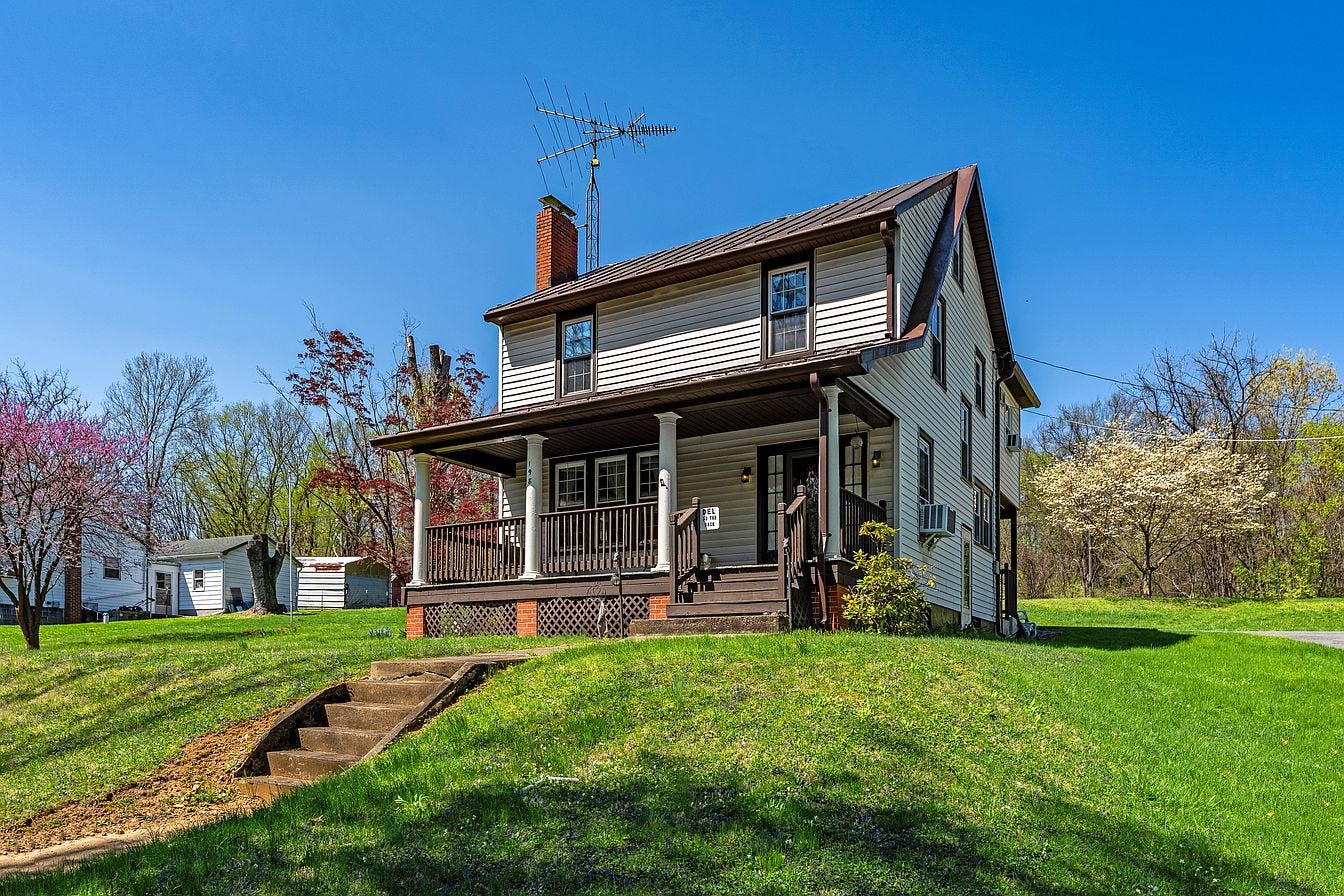
The first home, at 198 Henkle Moore Rd, is in Harpers Ferry, which isn’t really rural West Virginia in any meaningful sense. It’s a DC commuter town, a National Park tourist destination, and one of the wealthiest ZIP codes in the entire state, with a median household income nearly fifty percent higher than the West Virginia average. The median property value there is $529,000. He posted a home from one of the most expensive communities in WV to prove WV is affordable.
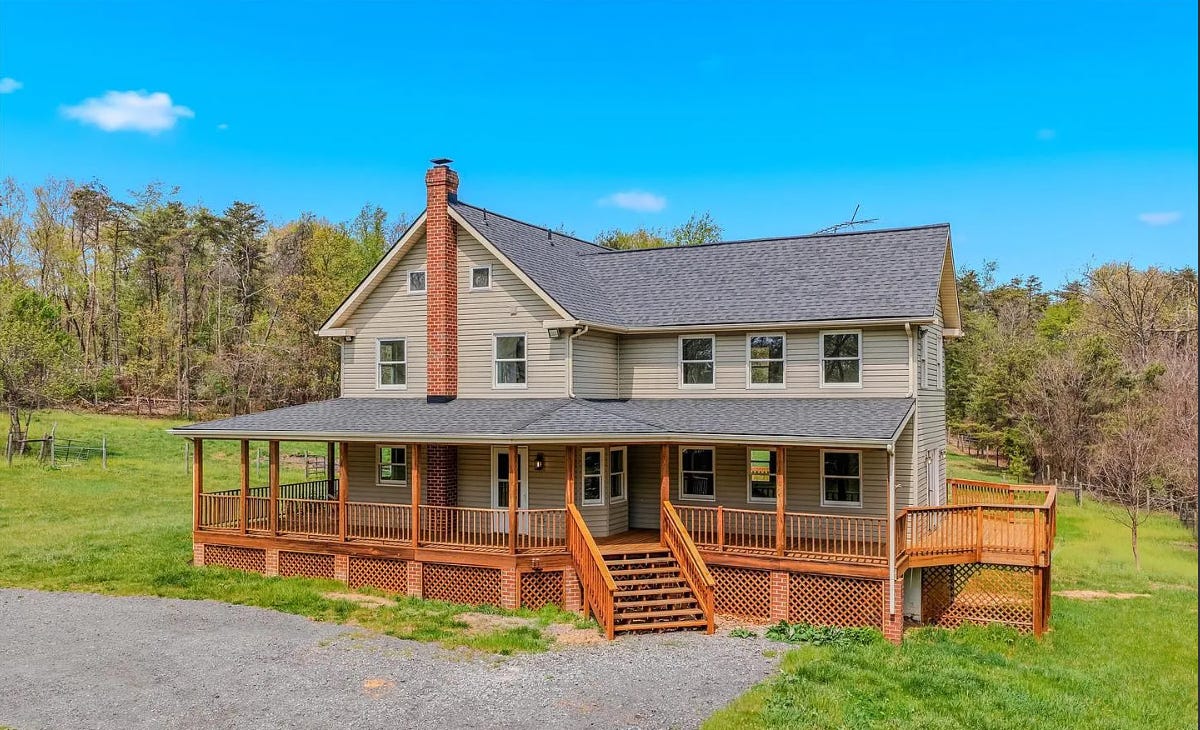
The second listing, in Hedgesville, is currently listed at $849,999. The catch Phil didn’t mention is that it comes with 43 acres of land and three separate subdivided lots.
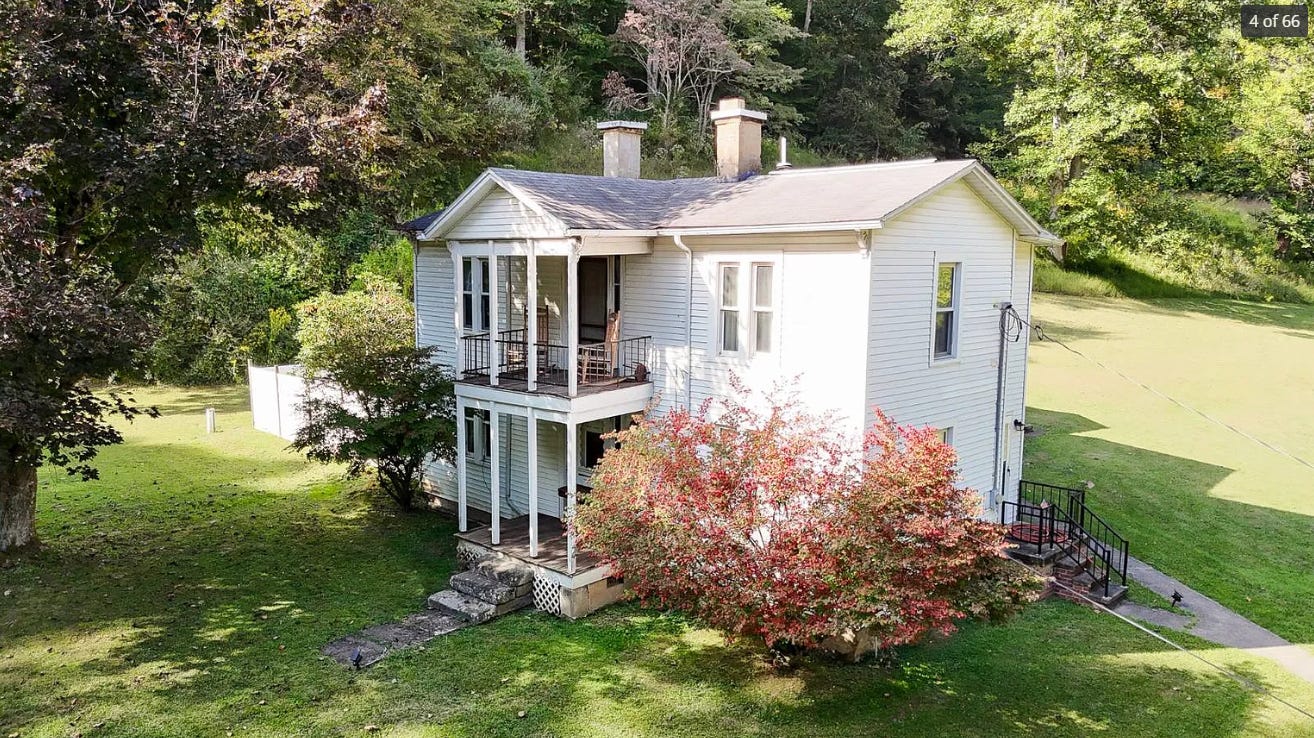
The third pick is where it really falls apart. This Glenville property is in Gilmer County — genuine, deep Appalachian West Virginia, a place with a median household income of around $48,000 and a median home value of $83,800. Phil posted a $320,000 listing in a county where the typical home costs $83,800 as evidence the market is fine. That property — another large acreage farmhouse, on 50 acres — is nearly four times the county’s median home value and almost seven times the local median income. By any conventional measure of affordability, that’s a huge issue.
Obviously, Magness was over the top, and sadly representative of a strange mentality some bring to the discussion about the housing crisis: total denialism. This view is particularly pervasive among older Americans, but it’s not just confined to them.
There’s another view, however, held by many younger conservatives, as well as those on the left. It was espoused by dozens of comments under our post, and even the posts of others: that people know something is broken, but they believe that it is so broken beyond repair that they don’t think it’s fixable in the near future. It’s tragic: people truly have the genuine sentiment of wanting to afford a home, raise a family, and put down their roots.
They just don’t think it’s possible. This turns people away from having hope for the future and engenders apathy; it’s hard to expect people to be patriotic for a country that they don’t believe they will ever have a piece of.
There are a few factors affecting homebuyers that have led to a housing crunch. The simple fact is that we are not building enough homes in America, and we need zoning and permitting reform to utilize smaller lots, more flexible floor plans, and reduce compliance costs. A recent New York Times piece covered the fact that new home construction dropped 6 percent from 2024 to 2025. If your intended goal is to spur more construction – this is horrific.
Then there’s the second problem: people won’t move due to the rising cost of mortgages compared to the historic low rates from pre-COVID. Why would any renter leave to pay more, and why would a downsizing older couple sell their likely-inflated home, take the capital gains hit, and then end up paying a higher interest rate?
There’s also the fact that home prices have outpaced real wage growth for many Americans, especially in rural areas. A Redfin report from November 2025 pointed out that the income needed to own a home in a rural area jumped 106 percent from pre to post pandemic.
You won’t be surprised at that, having already seen the insane increases in prices inadvertently illustrated by Magness. But because a year seems like an eternity in 2026, people forget that just ten years ago, housing prices weren’t so astronomically horrific. Yes, they were higher than they should be, but there’s a reason why the Bush administration didn’t focus on it in the early 2000s, and why the Obama administration – outside the immediate crash – didn’t spend lots of time on it either.
There’s a reason for that: it just wasn’t the incredibly daunting issue it is today. But that should inspire us to act. This isn’t baked into the fabric of American housing. It’s something which can be changed.
But it won’t be done if we pretend it’s not a problem. As they say, the first step is acceptance. So, let’s accept the problem and move on to step two.
It's absolutely ridiculous that we have to look into rural towns in the middle of nowhere to find affordably houses. Where I live, a 1000 sq ft 3/2 on a quarter acre is on the market for $400k. It's a nice little house, but a house like this should be attainable after saving up for two years after college.